
Graduate cover letter with no experience: build a case from real evidence
Build a graduate cover letter from real study, work and volunteering evidence, with a practical outline and a final accuracy check.
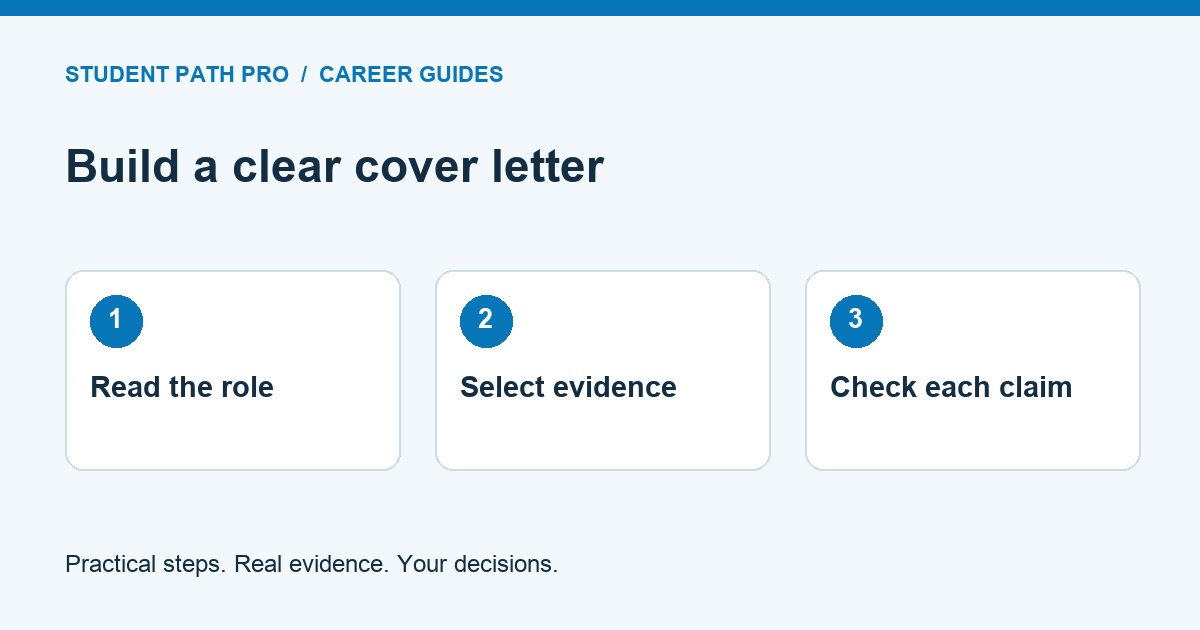
Having no experience in a particular job is different from having nothing useful to say. A graduate cover letter can connect the employer’s actual requirements with evidence from study, paid work, volunteering or responsibilities outside a formal workplace. The aim is not to disguise a missing employment history. It is to explain why the role interests you and what you can already demonstrate, while being clear about what you still need to learn.
This guide offers an original drafting exercise rather than a letter to copy. Follow the employer’s instructions first: a requested supporting statement, application-form answer or short email may need a different format. Do not attach an extra document merely because a generic checklist says every application needs one.
Start with the decision the reader must make
Before drafting, write the job title and three requirements on a blank page. Choose requirements that appear central to the advertised work, rather than selecting only the easiest words to match. Beside each requirement, note one situation in which you did something relevant. Then add the action you personally took, the result you can substantiate and any limitation that matters.
For example, a student applying for an operations assistant role might connect accurate record keeping with maintaining a society equipment register. That is a relevant comparison, but it is not experience managing a commercial inventory system. Keeping that distinction visible gives the reader evidence they can assess. Our job criteria guide can help you separate essential requirements from desirable ones before you decide whether to apply.
Build a four-part outline
Use four jobs for the letter: identify the role, explain your interest, demonstrate relevant contribution and close clearly. These are drafting functions, not compulsory paragraph counts. An employer’s word limit or question structure takes priority. A short letter with two well-chosen examples is often easier to assess than a long catalogue of unrelated activities.
In the opening, name the position and explain your current situation accurately. You might be completing a degree, changing direction after graduation or returning to work. Avoid starting with an apology for your background. Equally, do not describe yourself as an experienced professional when the evidence does not support that description. A direct introduction makes room for the useful detail that follows.
Explain interest through something specific
Research the organisation’s own website and the role description. Identify a service, project, customer group or working responsibility that makes this opportunity relevant to your interests. Write down why it matters to you and what you would like to contribute. Keep a note of the source so you can check the fact again before sending.
“Your organisation is prestigious” tells the reader little about your decision. A more useful explanation connects a real aspect of the role with something you have explored. For instance, if a job involves explaining technical information to customers, you might discuss enjoying that task while supporting a student project demonstration. Do not invent a lifelong passion, imply personal familiarity with a team you have never met or claim expertise from simply reading its website.
Turn one example into evidence
Consider this fictional drafting example: a course team received inconsistent survey responses, and one student checked the coding rules, flagged ambiguous entries and kept a record of the agreed corrections. A letter could describe those actions as evidence of careful handling of information and communication within a team. It should not claim that the student independently designed the whole research project if they did not.
Use the example to test your own paragraph. Can a reader tell what the task was, what you did and why it relates to the advertised role? Replace broad adjectives with actions wherever possible. If you cannot verify a number, omit it or describe the outcome in plain language. “Completed the agreed checks before submission” can be stronger than an invented percentage improvement.
Use experience outside your target sector
Part-time work can provide evidence of reliability, handling competing requests or explaining a process. Caring responsibilities may involve organisation, though you do not need to disclose private family or health details. Volunteering and society roles may show planning or collaboration. Coursework can demonstrate a method, an analytical decision or how you responded to feedback.
Select examples because they answer a requirement, not because they sound impressive in isolation. Our society experience guide explains how to separate a group’s achievement from your own contribution. If you use the same experience in your CV and letter, let the letter add useful reasoning or context instead of repeating the CV bullet word for word.
Address gaps without making promises
If a role asks for a tool you have only encountered briefly, be precise about your level. Explain what you have actually done and, where relevant, a concrete step you are taking to learn more. Do not promise to master an unfamiliar system before joining unless that claim is realistic and within your control. Some essential requirements cannot be replaced by enthusiasm; check those before investing time in the application.
An honest sentence about a transferable method can still help. You might have used a different spreadsheet package to clean a dataset, for example. Describe the task and approach, then distinguish it from direct experience of the employer’s named software. The reader should not have to discover the limitation later in an interview.
Review the letter as a complete application
Read the letter beside the CV version you will submit. Check dates, job titles, organisation names and any figures. Ensure that both documents describe the same contribution. Remove leftover references to another employer. Check that links work, attachments open and the file name is professional. If an adviser or trusted reader reviews the draft, ask which requirement each example supports, rather than asking only whether it sounds good.
Oxford Careers recommends targeting the letter and seeking feedback on a draft. Use that principle as a final check, while treating the worksheet here as your own decision tool. Save the final version in your graduate application tracker with the role, deadline and submission confirmation. A saved draft is not a submitted application. The finished letter should leave you able to discuss every sentence comfortably, without having to defend an inflated claim.