
Placement application checklist: confirm eligibility before writing
Check course approval, employer eligibility, evidence and documents before submitting a placement application.
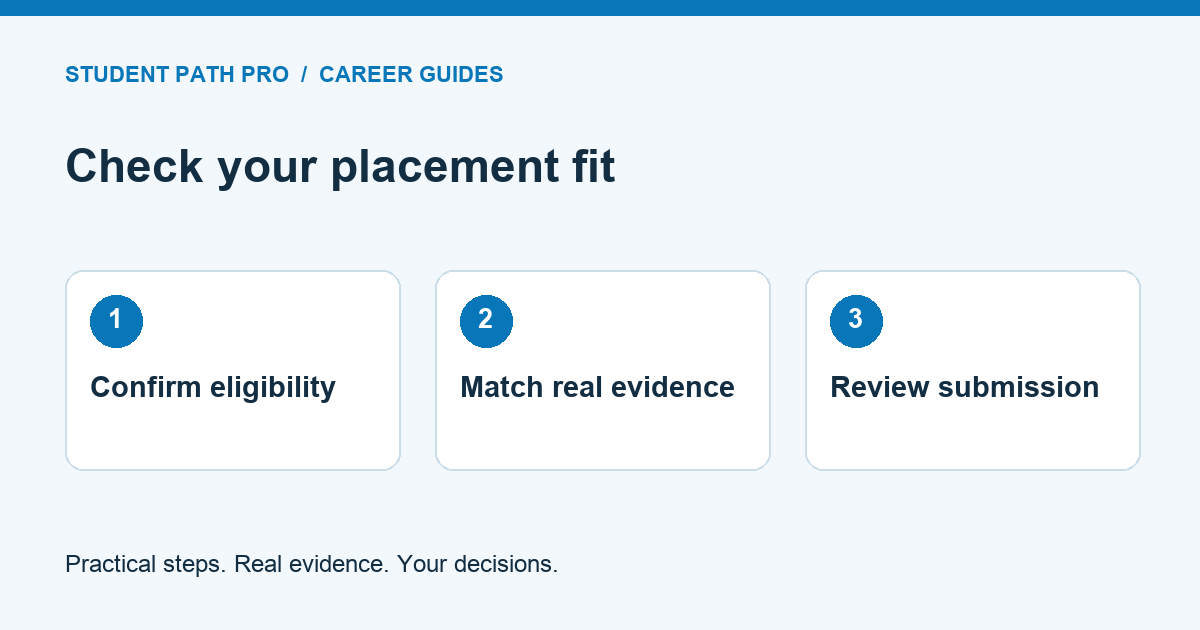
A placement application involves two decisions: whether the employer's role suits you and whether the placement fits your course. Check both before spending an evening polishing answers. An impressive opportunity can still have the wrong dates, duties or approval requirements. This checklist helps you collect the necessary evidence, ask useful questions and submit an application you can later explain confidently.
Create a one-page record for the vacancy
Save the employer's listing and the date you accessed it. Record the job title, location, proposed duration, start date, closing date and application method. Keep the original link alongside your notes. If the description changes, you will have a record of what you relied on. Mark missing details clearly rather than filling them with assumptions based on another employer's programme.
Add a second section for your course requirements. Write down the relevant university guidance, your placement team's contact route and any approval steps. University of Hertfordshire's placement eligibility guidance, for example, explains that placement arrangements depend on the course. Treat such guidance as an example of why course-specific checks matter, not a rule that automatically applies to your institution or degree.
Confirm the academic fit
Ask your own placement team whether your course permits the proposed arrangement and what makes a role suitable. Check the required duration, timing, assessment and approval process. A job offer alone may not complete the university's requirements. If your course has particular rules about duties, supervision or documentation, obtain those rules before telling an employer that everything is approved.
Write questions precisely. For example: my course placement window is these dates, while this vacancy advertises those dates; can this arrangement satisfy the course requirement? Include a link to the employer's description. Avoid sending a general request to approve a role without its dates or duties. Clear information makes it easier for the team to identify the actual issue and tell you what to do next.
Read employer eligibility separately
Check the advertised degree subjects, year of study, expected graduation date and other stated requirements. Separate essential criteria from desirable experience using the job criteria guide. A requirement that applicants return to university after the placement is different from a preference for a particular software tool. Do not assume either is flexible without evidence from the employer.
Where eligibility involves immigration or permission to work, use current official guidance and your university's qualified advice service. This checklist does not determine your individual eligibility. Record the question that needs answering and who can answer it. Do not rely on a friend's experience, an old advert or a generic careers article to resolve a condition that depends on your circumstances.
Build evidence for the actual duties
Choose three or four important tasks or skills from the description. For each, identify something you have actually done in study, work, volunteering or a society. Write the situation, your personal action and the result you can substantiate. If the experience was shared, distinguish your contribution from the team's. Small, precise examples are more useful than claims that you are excellent at everything.
Suppose a placement involves checking records and communicating with colleagues. A student might describe checking event registrations against a booking list and clarifying discrepancies with the organiser. That example can demonstrate care and communication without pretending it was a professional data-management job. Explain the relevant action in plain language, then state honestly what tools or processes you would still need to learn.
Check the practical arrangement
Record advertised pay, hours, attendance expectations and location. Consider travel or relocation using your own realistic budget. List any questions about equipment, supervision or expenses that the advert leaves unanswered. Do not count an unconfirmed benefit as part of the offer. If a practical constraint would prevent you accepting the placement, resolve it early through the employer's stated enquiry route.
Discuss academic deadlines with your placement team as well as employer deadlines. A university approval date, a recruitment closing date and a proposed start date serve different purposes. Put each in your calendar with the action required. If an employer changes the start date after an offer, return to the university rather than assuming the earlier approval still applies unchanged.
Prepare the submission as a complete package
List every requested item: CV, questions, covering letter, portfolio or other evidence. Follow the employer's format and file-size instructions. Check that names, dates and qualification details agree across documents. Use a sensible filename and open the final file before uploading it. A correctly named draft is still a draft if it contains another employer's name or unfinished notes.
Read each answer against the question asked. An example of teamwork should explain your contribution and interaction, not just describe the event. Remove claims you could not defend in an interview. Use the CV tailoring guide for a final evidence check, and keep a copy of the exact documents submitted. The submission receipt and saved application will help you prepare if you are invited to the next stage.
Use a final stop-or-submit check
Before pressing submit, confirm four things: you understand the role, you have checked the relevant eligibility conditions, your documents answer the instructions and you know what remains uncertain. An unresolved preference may be acceptable; an unresolved mandatory condition needs a reliable answer. If you are waiting for clarification, record the date and the next action instead of repeatedly rewriting the same application.
After submission, update your graduate application tracker with the confirmation, documents and any stated response times. Prepare for possible selection tasks without assuming that an invitation is guaranteed. If an offer arrives, recheck the written duties and dates against the arrangement your university considered. This final comparison helps you move from an attractive advert to a placement that is properly understood by you, the employer and your course team.